Solar Inspection in Colorado Springs & the Front Range
What Solar Inspection Is
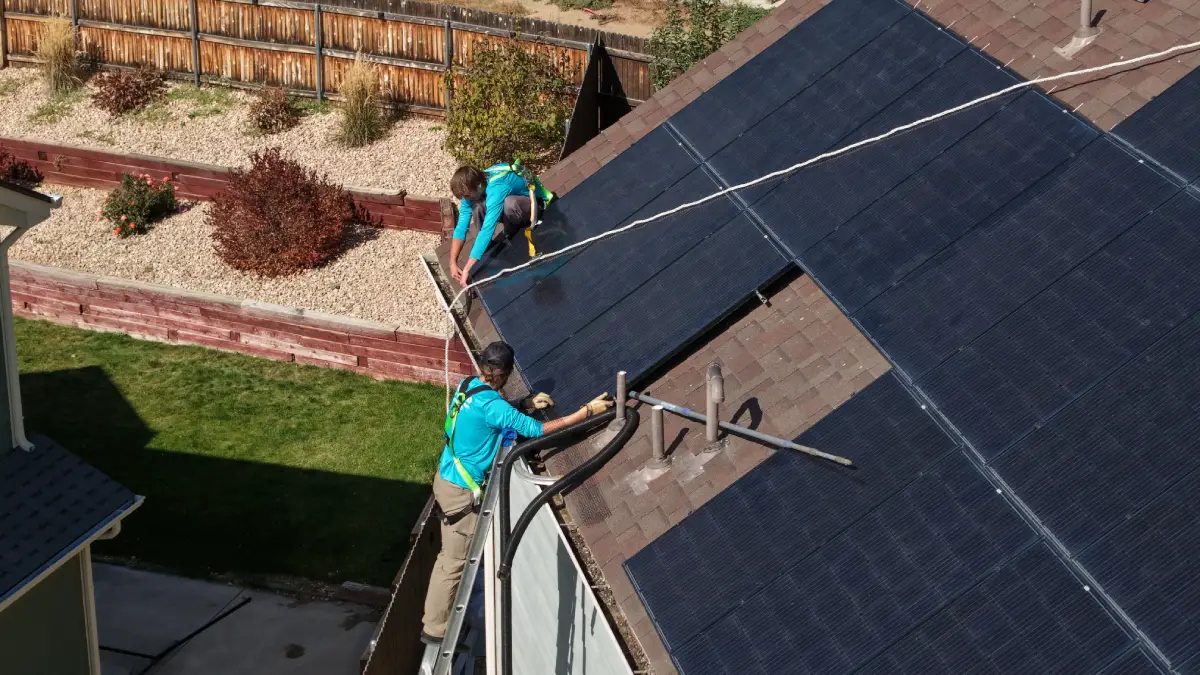
Inspection is how you find out whether the system's actually fine or actually losing you money. We check the panels, the wiring, the inverter, and the production numbers, then compare what the system is making to what it should be making for its size and your conditions. If it's down, we run troubleshooting to find the cause — inverter faults, shading, soiling, or a hardware problem.
It covers the diagnostic side of everything we do: solar system troubleshooting, inverter diagnosis, and a solar shading assessment when trees or new obstructions are in play.
How the Inspection Works
Pull Production Data
Physical Check
Inverter Diagnostics
Shading Assessment
Straight Diagnosis
What's Included
- Production compared to expected output — what your system should be making vs what it is
- Panel and wiring check — physical condition + connections
- Inverter diagnostics — fault codes, abnormal readings
- Shading assessment — where trees or new obstructions are in play
- Clear diagnosis with a straight recommendation — including "it's fine" when that's the answer
When You Need This
If your bills have crept up, your monitoring shows a drop, you've never had the system checked, or you just want to know it's working before you assume it is — that's an inspection. It's also the right first step if you're not sure whether you need cleaning, a repair, or nothing at all.
Why Solar Guard
We diagnose before we recommend, and we'll tell you when the answer is "it's fine." We don't sell new systems, so there's no incentive to talk you into one. Local, veteran-owned, fully insured — and the same number to call when you need the fix.

Service Areas Where We Offer Solar Inspection
Same crew, same quality, every city across Colorado's Front Range.
FAQs About Solar Inspection in Colorado
Real questions from homeowners across the Front Range, with straight answers.
-
How do I know if my panels are actually working right or just looking like they are?
That's exactly what an inspection answers. We compare your current production to what your system should be producing for its size, age, and the weather conditions during the period. A normal year-over-year drop is small — about half a percent. A 5%, 10%, or 20% drop isn't aging; that's something hiding. We find what. -
My Enphase app says "Microinverter Not Reporting" — is that bad?
Usually less bad than it looks. The error means the Power Line Communication signal between that panel and your gateway is being interrupted — sometimes by snow, sometimes by a router move, sometimes by an actual failing microinverter. We isolate which by checking production on that panel directly versus the others. If it's a true micro failure, those are typically still under 25-year manufacturer warranty and we handle the RMA paperwork. -
Should I get my panels inspected after a hailstorm?
If hail bigger than a quarter hit your area, yes. The dangerous damage isn't visible — it's micro-cracks in the silicon underneath glass that still looks intact. These crack the cells but not the panel face, so the panel looks fine and produces 10-30% less. We use thermal imaging to spot the hot spots that show where micro-cracks are. After the big Front Range storms (May 8 2017, June 22 2023, May 30 2024) we ran a lot of these inspections. -
Can you inspect a system whose installer went out of business?
Yes. We inspect every brand and every installation, including orphaned systems from Titan, Pink Energy, ADT, Sunnova, SunPower, Solcius, Refresh Energy Group, EcoMark, and others. We can read your inverter and monitoring directly to figure out what you've got even if your documentation is gone. -
How much does a solar inspection cost?
Most residential inspections fall between $250 and $450 in Colorado, depending on system size and what's needed (visual only vs. thermal imaging vs. electroluminescence testing). We quote it on the call after a few questions about your system. If we end up doing repair work afterward, the inspection cost often rolls into the bigger job. -
Are you going to use the inspection to sell me a new system?
No. We service existing solar; we don't sell new installs. The inspection ends with a diagnosis and a recommendation for the smallest fix that solves the problem. Sometimes that's nothing at all. You won't get talked into a replacement panel you don't need.